
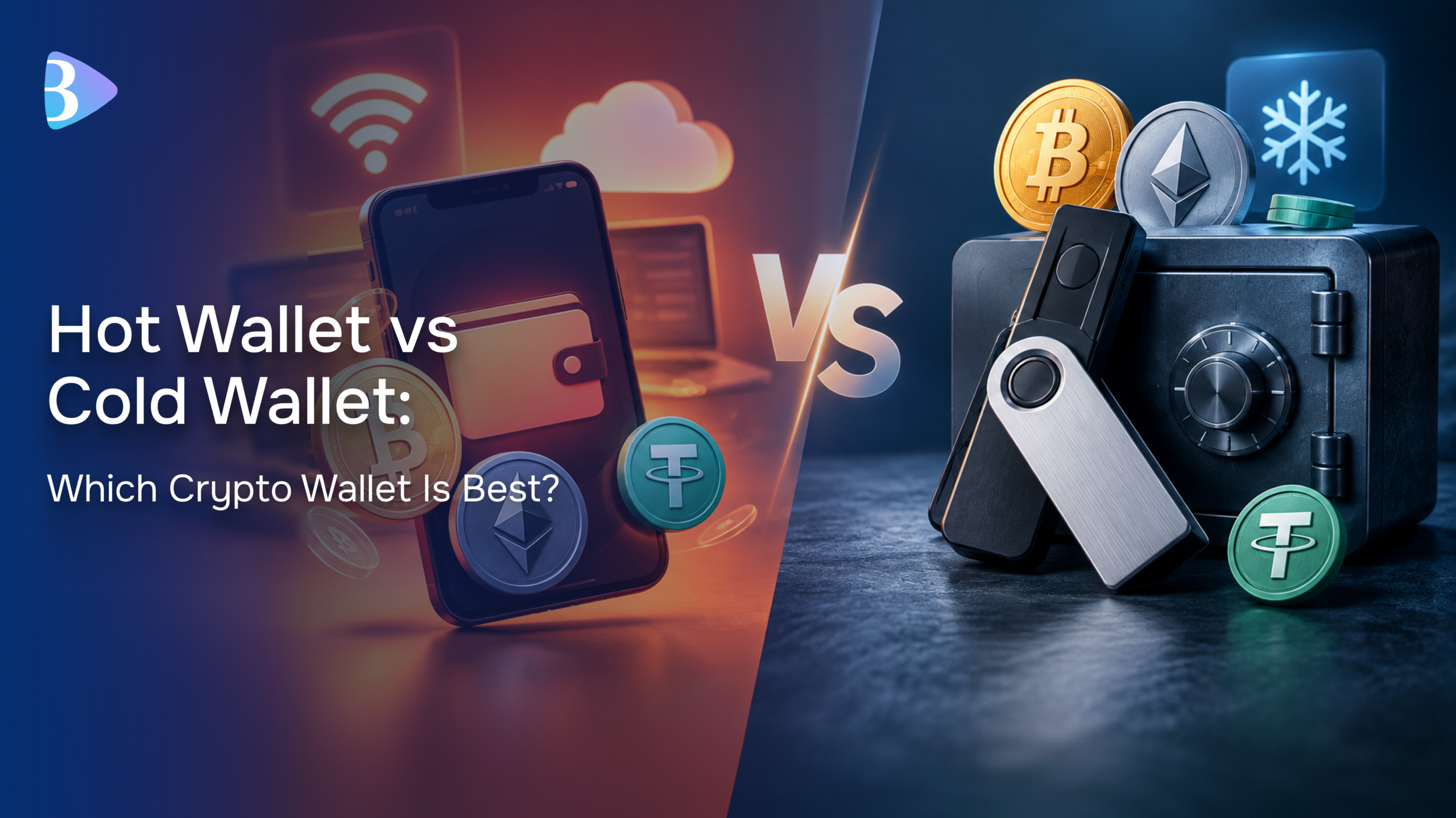
You can’t just pick a crypto wallet without knowing which one will actually help you to manage your cryptographic keys and manage digital assets on a blockchain. It’s a crucial step a crypto trader makes because the type of wallet you choose directly affects how easily you can use your crypto and how exposed your private keys are to online threats. When it comes down to hot wallets vs cold wallets, it’s really a question of convenience, security, and how much you value being able to access your funds in a pinch.
A hot wallet is always connected to the internet, making it perfect for day-to-day transactions. A cold wallet, on the other hand, keeps your private keys offline which is great if you want to stash your assets for the long haul. Your choice really depends on how often you use crypto, how much you own, and how cautious you want to be about security.
Difference Between Hot and Cold Crypto Wallets
- Hot wallets connect to the internet like Mobile Bitcoin Mining Apps, desktop programs, and browser extensions, easy to use when you need to send, receive, or swap crypto on a regular basis.
- Cold wallets keep your private keys tucked away offline when you’re not using them. Hardware wallets are probably the best-known example, but there are a few other types of cold storage out there.
Here’s a quick side-by-side:
| Hot Wallet | Cold Wallet | |
| Internet connection | Usually connected | Usually offline |
| Main advantage | Quick access | Reduced online exposure |
| Best suited for | Frequent transactions | Long-term holdings |
| Common form | Mobile, desktop, browser wallet | Hardware wallet |
| Main risk | Online attacks and scams | Lost device or recovery phrase |
One thing to remember: your actual cryptocurrency isn’t sitting in your wallet. The wallet just holds the private keys that give you access to those assets on the blockchain, just like a UPI app.
Which Is Safer: Hot Wallet or Cold Wallet?
A cold wallet is significantly safer than a hot wallet because it stores your private keys completely offline, but if you do your transactions very much online, then a hot wallet is the right choice. The big difference in security comes down to online exposure.
Hot wallets are convenient, but because they’re connected to the web, they’re more open to phishing attempts, malware, fake wallet apps, sketchy browser extensions, or accidentally authorizing a bad transaction.
Common risks include:
- Phishing sites asking for your info
- Malware sneaking onto your phone or computer
- Fake wallet apps
- Clicking “approve” on something malicious
- Accidentally revealing your recovery phrase or private key
Cold wallets keep most of your keys offline. This means less direct online risk, but it’s not bulletproof. If you lose the device, share your recovery phrase, buy compromised hardware, or approve the wrong transaction, you can still lose your crypto.
Cold storage closes one door for attackers but still requires you to avoid mistakes.
When is a Hot Wallet the Right Call?
Hot wallets shine when you need quick, regular access to your crypto. If you trade often, send money back and forth, interact with DeFi apps, or need to jump into Web3, a hot wallet is your friend.
Scenarios where hot wallets make sense:
- Frequent transactions
- Active trading or swapping
- Using DeFi/Web3 services
- Keeping small amounts of crypto for daily use
- Wanting access from your phone or laptop
Free crypto wallets are fine for getting started, especially if you’re just learning how things work and don’t actually invest a lot of real money.
When is a Cold Wallet the Better Option?
Cold wallets are best for assets that you plan to sit on. Long-term holdings, big amounts, or coins you rarely move all fit best in cold storage. Keeping those private keys offline chops down your online risk a lot.
Think about cold storage if:
- You’re holding crypto for months or years
- You move your assets rarely
- You own a lot of crypto
- You don’t want to depend on an internet-connected device
- You’re comfortable handling a physical device and recovery phrase
Whether you do Crypto Cloud Mining & Free Bitcoin Mining, keep your recovery phrase safe; don’t keep it as a screenshot, in an email, on the cloud, or in a chat app. If someone finds it, they can take your assets.
A cold wallet protects your keys from online thieves, but it can’t protect you from poor storage choices.
Which Wallet Should You Use: Hot Wallet vs Cold Wallet
There’s no single best wallet for everyone. The way you use crypto should drive your choice.
Here’s a simple cheat sheet:
– You make frequent transactions: Hot wallet
– You trade a lot: Hot wallet
– You use DeFi or Web3 often: Hot wallet
– You mostly hold crypto long-term: Cold wallet
– You rarely move your assets: Cold wallet
– You want minimal online exposure: Cold wallet
– You need both easy access and secure storage: Use both
Honestly, most people find a combo works best. Keep a small balance in your hot wallet for everyday stuff, and put your main stash in a cold wallet for safekeeping. That way, you keep your regular spending separate from your long-term savings.
Hot Wallet vs Cold Wallet: The Bottom Line
It really boils down to your habits. Go for a hot wallet if you need fast access and trade a lot. Pick cold storage if security and long-term storage matter more. And if you want both, there’s nothing wrong with splitting your funds.
If you are exploring ways to get started with Bitcoin, BitplayPro offers a different approach through cloud mining. Its mobile app lets users build mining power, complete daily challenges, and earn Bitcoin through a simple experience.
Frequently Asked Questions
Is a hot wallet safer than a cold wallet?
A hot wallet offers faster access but greater online exposure. A cold wallet keeps private keys offline, generally reducing online attack risks. Neither option eliminates user mistakes or scams.
Can I use both a hot wallet and a cold wallet?
Yes. Many users keep smaller amounts in a hot wallet for regular transactions and store longer-term holdings in a cold wallet, reducing unnecessary online exposure.
Is a hot wallet suitable for storing Bitcoin long term?
A hot wallet can hold Bitcoin long term, but it remains connected to an internet-enabled environment. For larger long-term holdings, many users prefer cold storage.
What happens if I lose my cold wallet?
Losing the physical device does not necessarily mean losing your crypto. If your recovery phrase is safely backed up, you can usually restore access using a compatible wallet.
Which wallet is better for beginners, hot or cold?
A hot wallet may be easier for beginners because it offers simple access and convenient transactions. However, beginners holding larger amounts should learn proper cold-wallet security practices.